
A good website should make the business easier to understand and easier to choose
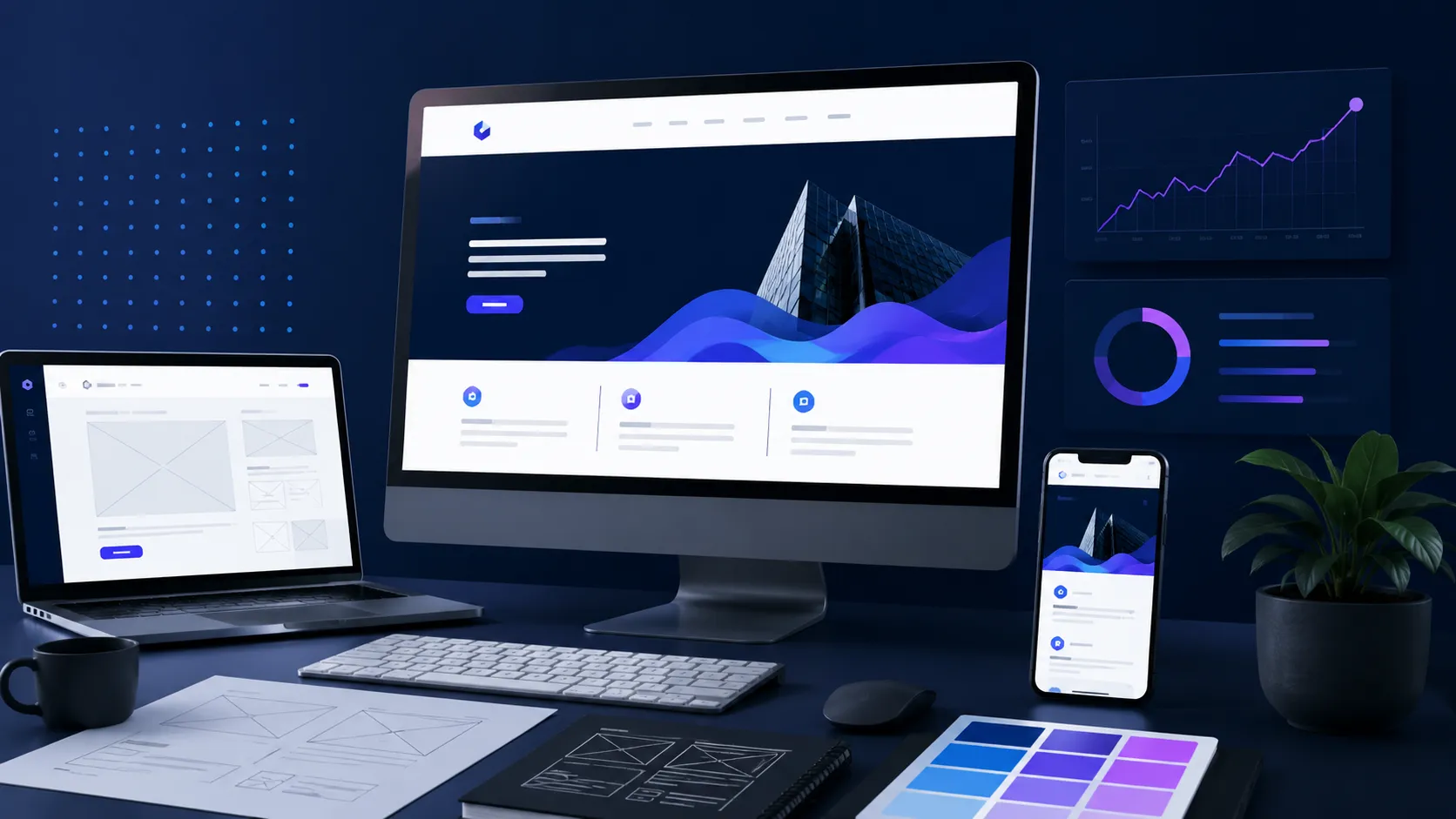
Small business websites are often judged too heavily on appearance. Design matters, but a visually impressive website can still fail if visitors cannot quickly understand what the business does, who it helps or what they should do next.
The strongest websites combine clear communication, sensible structure, good usability and enough trust to make a potential customer feel comfortable making contact. They also need to perform well technically and give search engines enough context to understand the business.
In practice, that means good web design is not simply about colours, fonts and imagery. It is about removing friction. Every part of the site should help a visitor move from arriving on a page to understanding the offer and deciding whether the business is right for them.
Start with clarity, structure and trust
A visitor should be able to understand the core offer within a few seconds of landing on the website. The main heading, introductory copy and navigation should work together to make the business clear rather than forcing people to search for basic information.
This sounds obvious, but many websites begin with vague marketing language that says very little. Phrases such as “innovative solutions” or “we put customers first” may sound positive, but they do not tell a new visitor what the company actually does.
Clear service pages are important too. If a business offers several distinct services, each one should usually have a dedicated page with enough information for someone to understand what is included, who it is for and what happens next.
The navigation should support that structure. Visitors should not need to open multiple menus or move backwards and forwards between pages to find important information. Good website structure feels simple because the organisation behind it has been thought through properly.
Trust is equally important. Small businesses do not always have the immediate brand recognition of larger competitors, so the website has to work harder to reassure people. Genuine testimonials, reviews, examples of previous work, clear contact information, useful business details and professional presentation can all reduce uncertainty.
The About page can help here as well. People often want to know who they will actually be dealing with, particularly for professional services, trades and higher-value purchases. Showing real experience and expertise is usually more persuasive than filling the page with generic company statements.
- What the business does.
- Who the service or product is for.
- Why somebody should trust the business.
- Where the business operates.
- How to make an enquiry, buy or take the next step.
Design for real users, not just the desktop preview
A website is only successful if it works well for the people using it. That means thinking beyond how the home page looks on a large desktop monitor.
A significant proportion of visitors will often be using a mobile phone. Buttons need to be easy to tap, text needs to be readable, menus need to work cleanly and important information should not disappear simply because the screen is smaller.
Mobile design also exposes unnecessary complexity. A section that looks impressive on desktop can become a frustrating stack of oversized graphics and empty space on a phone. The best responsive websites simplify where necessary rather than trying to reproduce the desktop version exactly.
Speed matters for the same reason. Visitors are unlikely to appreciate a visually complex page if it takes too long to become usable. Large images, excessive scripts, third-party widgets and poorly optimised page builders can all create delays.
Website performance also contributes to the wider SEO picture, but I would avoid treating performance scores as the objective in themselves. The goal is a site that loads quickly enough to provide a smooth experience and does not create unnecessary layout shifts or delays.
Calls to action should also be designed around the way people actually use the site. A visitor who is ready to enquire should not have to search for a contact page. Telephone numbers, enquiry buttons and purchase routes should appear naturally at the points where somebody is likely to need them.
This is central to how I approach web design in Wirral . The aim is not simply to create a site that looks good in a portfolio. It should support the business by making the customer journey clearer and reducing unnecessary obstacles.
If the website makes any of those things difficult, design changes should focus there first.
Build SEO and conversion into the website from the start
SEO is easier when the website has been designed around a clear structure from the beginning. Search engines need to understand what each page is about, which pages are important and how different topics relate to one another.
That means important services should have clear URLs, meaningful page titles, logical headings and relevant internal links. Images should be optimised, unnecessary duplication should be avoided and the site should be easy for search engines to crawl.
Local businesses also need to make geography clear where it is genuinely relevant. Service areas, contact details, business information and useful local context can all help search engines understand where the company operates.
This is where website design and SEO overlap. A website can look professional while still making organic search unnecessarily difficult. Equally, a site can be heavily optimised for keywords but still fail commercially if visitors do not trust it or cannot find the information they need.
The strongest approach considers both at the same time. The page structure should support search visibility, but the copy and design should still be written for people. Commercial pages should answer the questions potential customers need answered rather than simply repeating a target keyword.
The same principle is becoming increasingly relevant to AI-powered search. Search engines and AI systems need clear information about businesses, services, locations and expertise. Well-structured content and credible information therefore support both conventional search and AI Search Optimisation .
Finally, a good website should be measurable. Analytics, enquiry tracking and ecommerce data can show whether visitors are doing what the site was designed to encourage. That information is more useful than relying entirely on visual opinion.
If visitors regularly reach an important page but rarely enquire, the issue may be the offer, the content, the trust signals or the call to action. A website should be something that can be improved over time rather than a finished design that is never reviewed again.
A good small business website does not need to be unnecessarily complicated. It needs to communicate clearly, build confidence, work properly on mobile and make the next step obvious.
Get those foundations right, then support them with good search structure, useful content and ongoing measurement. A website that does those things well is far more valuable than one designed purely to look impressive.