
SEO and Google Ads solve different problems, even when they target the same search
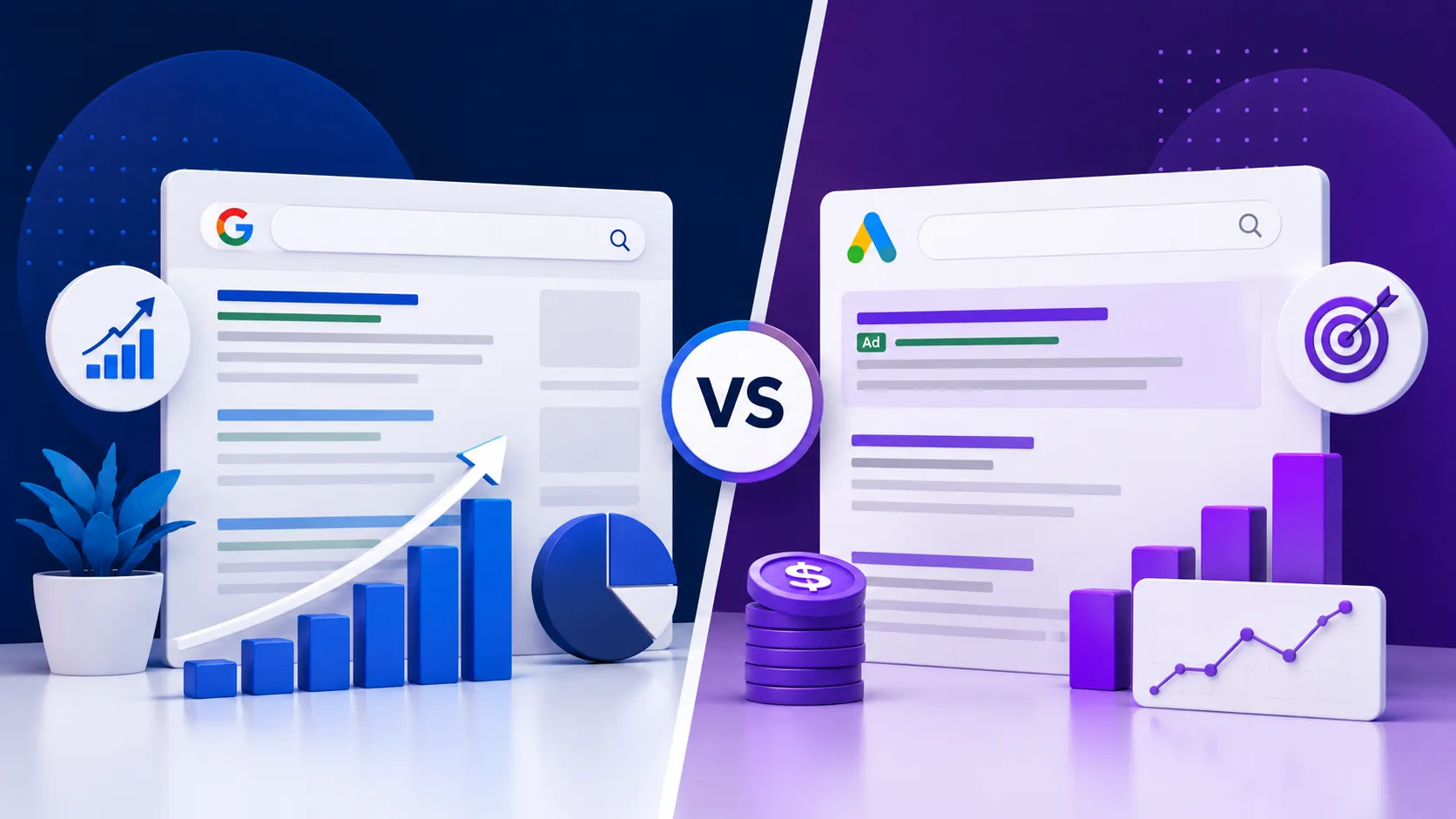
Businesses often compare SEO and Google Ads as though one has to be better than the other. In reality, they are different ways of gaining visibility in search and each has strengths that suit different situations.
Google Ads can create visibility quickly. A properly built campaign can appear for relevant searches as soon as it is active and funded. SEO takes longer because organic visibility has to be earned through relevance, authority, technical quality and time.
The trade-off is that paid visibility normally stops when the advertising spend stops, while SEO can continue generating traffic from work that has already been done. That does not make SEO free, and it does not make Google Ads wasteful. It simply means they operate on different commercial models.
When Google Ads makes the most sense
Google Ads is useful when a business needs search visibility quickly. That might be a new website with little organic authority, a new product launch, a time-sensitive service or a market where waiting several months for SEO to build would create a commercial problem.
Paid search also gives a business a high degree of control. Campaigns can target specific search terms, locations, devices and times of day. Budgets can be adjusted and activity can be increased or reduced relatively quickly.
That control can make Google Ads useful for testing demand. If a business is unsure whether a particular service or product will generate enquiries, paid search can provide data before a larger organic strategy is developed.
The challenge is cost. Competitive keywords can become expensive, particularly where many businesses are bidding for the same high-value enquiries. A campaign also needs to be managed carefully. Paying for clicks that are poorly targeted or sending visitors to weak landing pages can waste budget quickly.
Google Ads therefore works best when the commercial value of a lead or sale justifies the acquisition cost and the website is capable of converting the traffic effectively.
- You need visibility quickly.
- You want to test demand for a service or product.
- You can measure enquiries, sales or revenue accurately.
- Your margins can support the cost of paid acquisition.
- You have landing pages capable of converting traffic.
When SEO makes the most sense
SEO is usually a better fit when the objective is to build sustainable organic visibility over time. Rather than buying each visit, the business invests in improving the website, content and authority that support search performance.
That can include technical improvements, stronger service or category pages, useful supporting content, internal linking and relevant authority from other websites.
SEO usually takes longer to produce significant results, particularly in competitive markets. A new page may be discovered quickly but that does not mean it will immediately outrank established competitors.
The benefit is that strong organic pages can continue to attract traffic without a charge for every individual click. Over time, that can make SEO commercially powerful, particularly for businesses with a large number of relevant searches or expensive paid keywords.
Organic visibility can also strengthen the wider website. Work done to improve SEO often improves page structure, content quality, internal linking and user experience at the same time.
There are limits. SEO does not provide complete control over rankings, and results can fluctuate as competitors change their websites and search engines update how results are presented.
It is therefore better viewed as an asset that is developed rather than a switch that is turned on. Businesses that benefit most from SEO normally approach it consistently rather than expecting one round of optimisation to produce permanent rankings.
Neither approach is automatically better. The right choice depends on the commercial objective and how quickly the business needs results.
Why the strongest strategy can use both
SEO and Google Ads do not have to compete for the same budget forever. Used properly, they can support each other.
Paid search can create visibility while SEO is still developing. Search term and conversion data from Ads can also provide useful insight into which searches produce genuine enquiries or sales.
That information can help prioritise organic work. If a particular search consistently generates profitable customers through paid traffic, there may be a strong case for improving the site's organic visibility around the same subject.
SEO can then reduce dependence on paid traffic over time, particularly for searches where organic visibility becomes strong. That does not necessarily mean switching Ads off. Paid campaigns can continue to support competitive terms, promotions or areas where the business wants more control.
The website itself is central to both approaches. A poor landing page will make paid traffic expensive because fewer visitors convert. The same page may also struggle organically if it provides weak information or a poor user experience.
This is why website design should support the search strategy. Clear messaging, strong trust signals, useful content and a simple route to enquiry make both organic and paid traffic more valuable.
AI-powered search is adding another layer to this mix. Businesses increasingly need to think beyond a simple split between paid and organic listings. Clear, authoritative website information can also support AI Search Optimisation as new search experiences develop.
The decision should therefore come back to economics. How quickly do you need visibility? What does a lead or sale worth? How competitive are the searches? How strong is the current website? And how much can the business invest consistently?
Those questions are more useful than asking which channel is universally better.
Choose Google Ads when speed, control and immediate visibility are the priority. Choose SEO when the aim is to build stronger organic visibility and reduce reliance on paying for every click over time.
For many businesses, the most effective answer is not one or the other. It is understanding what each channel does well and using them together where the numbers make sense.